Atmospheric pressure
Online calculator — enter the values and get the result instantly, with the formula and a worked example.
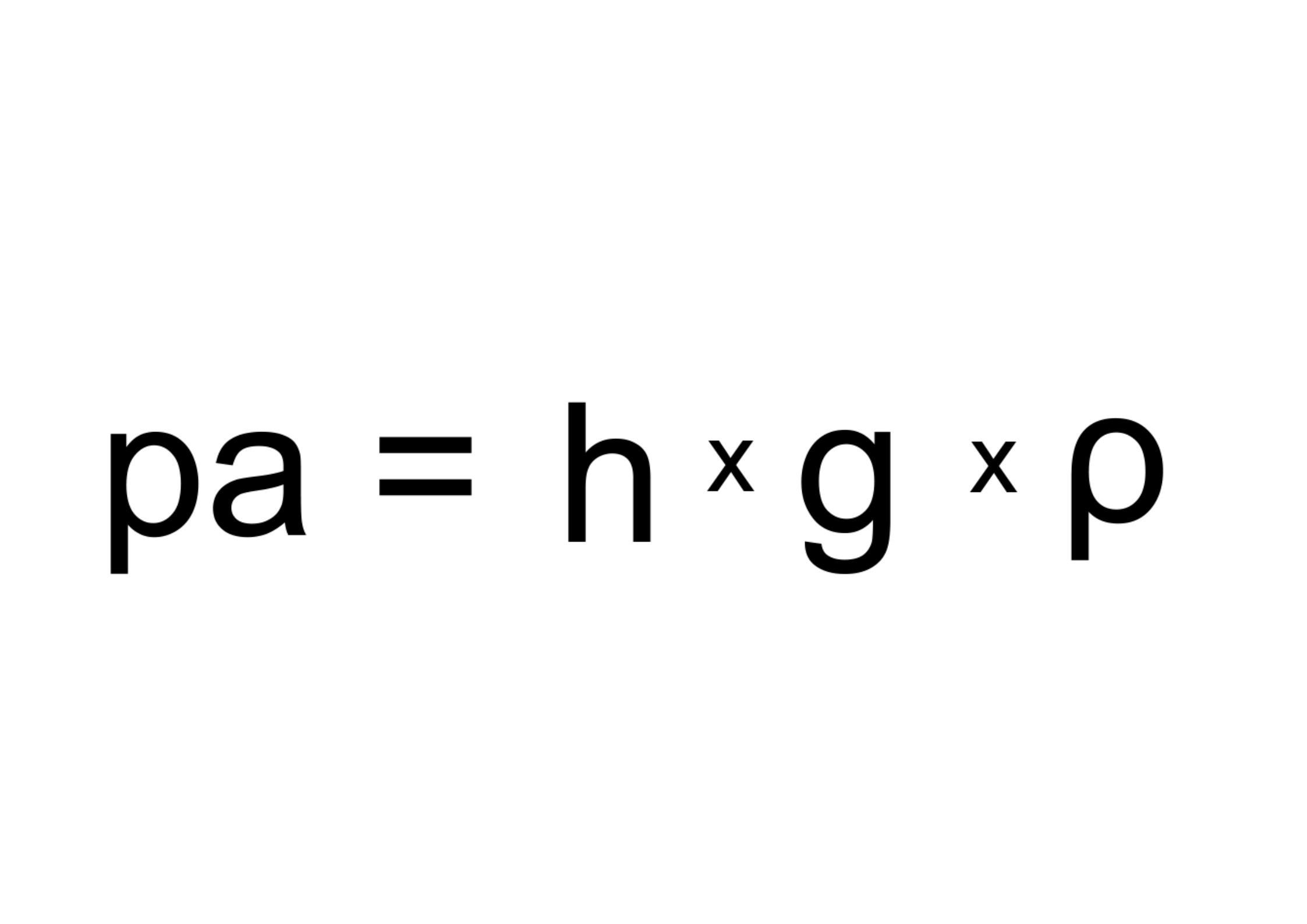
pa= Atmospheric pressure
h = height
= Air density
g = gravitational acceleration (approx 9,81 m/s)
Atmospheric pressure, also called barometric pressure, is the force that the weight of the air above us exerts on every surface it touches. Although we rarely notice it, the column of air stretching up to the edge of space presses on us constantly, with a standard value at sea level of about 101,325 pascals, or one atmosphere. Because there is less air overhead as you climb higher, atmospheric pressure falls steadily with altitude, which is why it is lower on a mountaintop than at the beach. It also shifts from hour to hour with the weather, since warm, rising air produces low-pressure zones while cool, sinking air builds high-pressure ones. These changes are measured with a barometer, and forecasters read them to predict rain, storms, or clear skies. Atmospheric pressure matters in everyday life too, from how aircraft cabins are pressurized and how our bodies react at high altitude, to the way water boils at a lower temperature in the mountains.
Solve it step by step — the next step unlocks only after a correct answer. You can type decimals with a dot or a comma.
